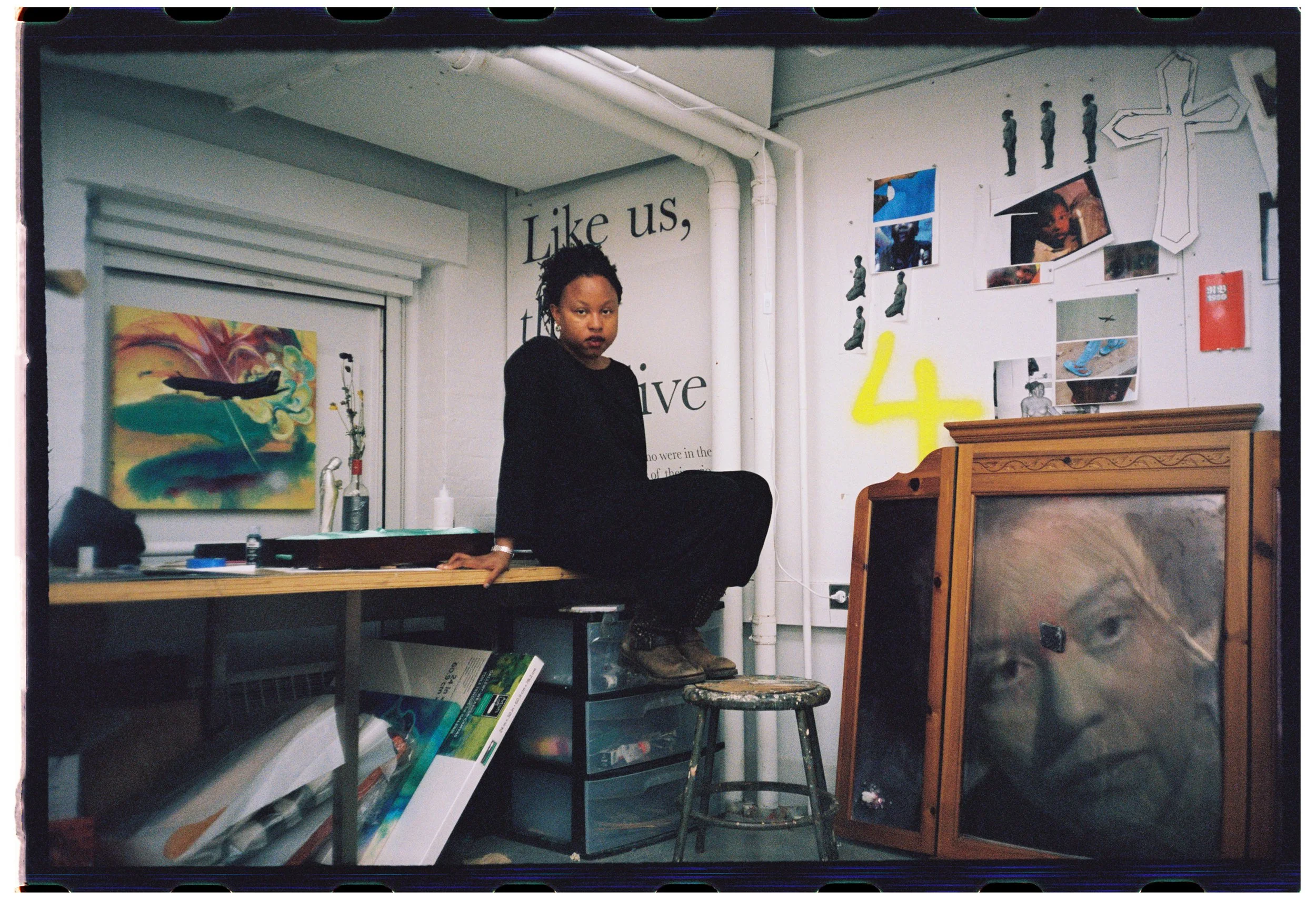
Portrait by Patricia Li
born 2003 in Houston, Texas
lives and works in Brooklyn, New York
(she/her/hers)
Onajevwe is a multidisciplinary visual artist working primarily in sculptural collage. Her work interrogates Black diasporic life as she lives and experiences it. Drawing from her upbringing, she expresses the evocative nature of her time in both Abuja, Nigeria, and London, England.
Having received a BFA from Cornell University in 2026, Onajevwe now lives and works in Brooklyn, New York. Her fascination with the gaze and domestic sensibilities grounds her practice as she uses found and family archival images to position the viewer as object.
Underlying her practice is the recurring presence of the number four. It operates as both structure and symbol, guiding her life path and practice. One of four children, Onajevwe understands this number as deeply personal, signifying protection and spiritual growth.